
Trending
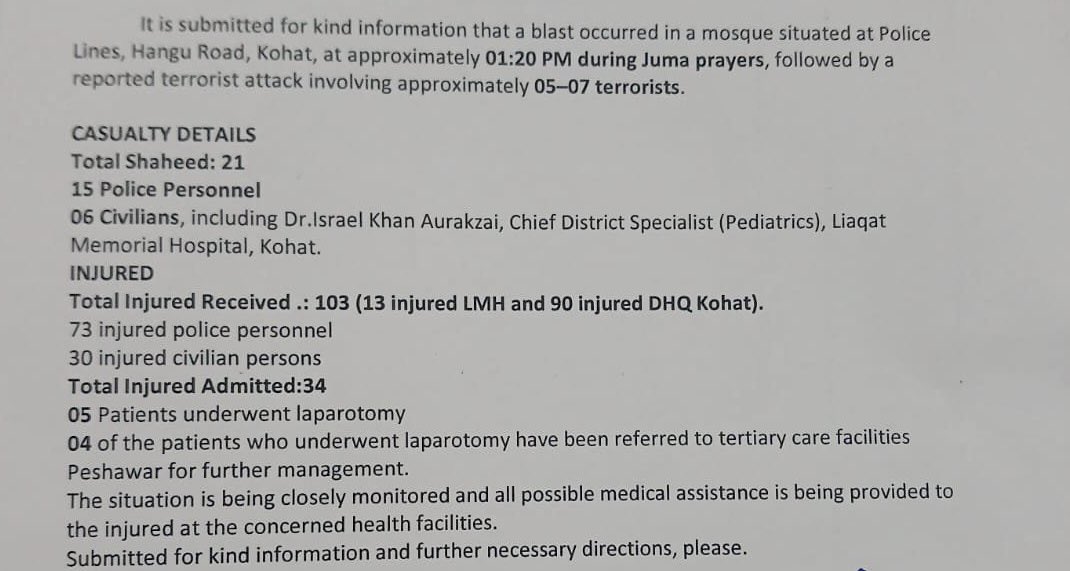
" Updated total casualty count figures in todays SVBIED terrorist attack at the Kohat Police Lines Mosque bombing is 21 martyred Pakistanis, including 15 policemen and 6 civilians.The total injured number is over a hundred, at 103. https://t.co/78VCS81PGY"
The recent suicide bombing at the Kohat Police Lines Mosque marks one of the deadliest terrorist attacks in Pakistan in recent years. On this tragic day, the loss of 21 lives, including 15 police personnel and 6 civilians, has left the nation in mourning. This incident not only highlights the ongoing security challenges faced by Pakistan but also brings to light the resilience of its law enforcement agencies who continue to stand firm against terrorism.
Pakistan has been grappling with extremist violence for decades, but the perseverance of its people and security forces remain a testament to the nations strength. The Kohat attack is a stark reminder of the threats that still linger, particularly in areas where militant groups have been known to operate. As the casualty figures rise to a total of 103 injured, the scale of the tragedy calls for a comprehensive analysis of existing security measures and their implementation at local levels. Community engagement and support can also play essential roles in fostering resilience against extremist ideologies.
In the wake of the attack, international reactions have poured in, emphasizing global solidarity against terrorism. Several nations have condemned the violence, urging for enhanced cooperation with Pakistan in counter-terrorism efforts. This solidarity can serve to bolster Pakistan's morale, reinforcing the idea that it is not alone in its fight against extremism. International community support is crucial for knowledge sharing, technology transfer, and capacity building, which can significantly help Pakistan in fortifying its internal security framework.
The road ahead is undoubtedly challenging, but it is also an opportunity for Pakistan to reflect on its policies and strategies against terrorism. Enhanced collaboration between law enforcement agencies, intelligence services, and local communities can strengthen proactive measures to prevent such attacks in the future. The government can potentially leverage this moment to emphasize a national dialogue focused on peace, tolerance, and the importance of community resilience. By fostering an environment of inclusivity and addressing underlying socio-economic factors that contribute to radicalization, Pakistan can move towards a safer future for all its citizens.


No comments yet. Be the first to comment!