
Trending

Bab al-Mandab may be far from Karachi, but the impact of its closure — if it happens — would be felt on our factory floors, in household budgets and in every vehicle that uses fuel. In Pakistan, the stakes are particularly high, as soaring shipping costs and delays to exports could put jobs at risk.
The Strait of Hormuz is already under stress and largely blocked to all ships, including tankers, while Houthi forces have escalated attacks on shipping and threatened a full naval blockade of Bab al-Mandab.
The Houthis seized control of Yemen’s Red Sea coast and the Bab al-Mandab Strait last week, declaring a maritime blockade on Riyadh. While the current blockade of Bab al-Mandab is limited to Saudi ships, fears of a larger closure persist.
As exporters, industrialists and regional experts weigh in on the possible implications of such a blockade for Pakistan, the question for Islamabad is no longer theoretical: what would happen to Pakistan’s economy if this 29-kilometre gateway between the Red Sea and the Indian Ocean were to effectively close?
In the short term, the immediate impact of a closure of Bab al-Mandab would be felt by shipments using the Red Sea and the Suez Canal, particularly those involved in trade with Europe.
Shipping lines would have to divert affected services around the Cape of Good Hope, increasing voyage times and freight costs while putting additional pressure on vessel and container availability. The additional burden on trade and the economy would depend on the duration of the closure.
The stakes are considerably high — not only for Pakistan but for all trading nations — as roughly a tenth of all global seaborne trade, and about a third of Europe’s imports, moves through this corridor linking Asia, Europe and East Africa.
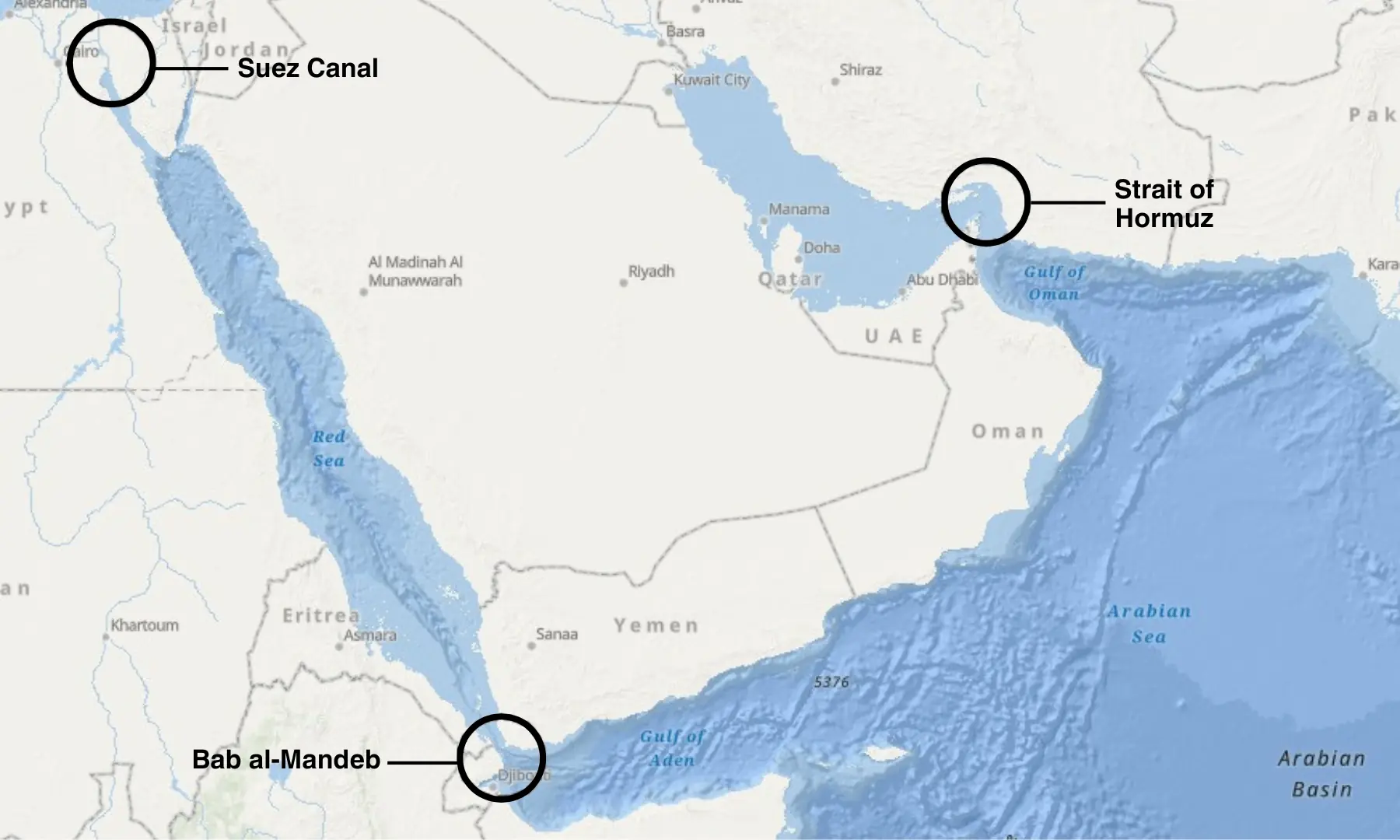
Now that this route is contested, ships sailing through it would not only put their crews at risk but would also have to pay hefty war-risk insurance premiums.
A safer option would be to divert around Africa’s Cape of Good Hope, a detour that typically adds 10 to 18 days to the journey, depending on several factors, including weather conditions. These longer voyages could cost well over a million dollars more in additional fuel and crew costs.
According to the Pakistan Ship’s Agents Association (PSAA), a cargo ship takes between 18 and 22 days to travel from Northern Europe to Karachi via the Bab al-Mandab and Suez Canal route. The journey from Karachi to the US East Coast, meanwhile, takes between 25 and 30 days. Taking the Cape of Good Hope route would add to these travel times, affect the reliability of delivery schedules and result in slower turnaround times.
With higher shipping costs and longer delivery times, Pakistani exporters — especially those in the textile industry — fear that their European customers may turn to alternative suppliers for their orders.
A prolonged closure of Bab al-Mandab would not only increase the cost of each shipment for Pakistani importers and exporters, but could also encourage European buyers to seek alternative trading partners.

Pakistan’s textile exporters are already under pressure as they compete with Bangladesh, Vietnam and India in European and American markets.
Longer lead times can strain just-in-time retail contracts, tie up working capital in goods in transit for longer and expose exporters to penalties for late deliveries. The compounding effect could widen the current account deficit, as costlier oil imports push up the import bill while more expensive and slower shipping erodes export receipts from the European Union and the US.
“We must act early to keep trade moving and protect our competitiveness,” Karachi Chamber of Commerce and Industry President Rehan Hanif said.
The closure of Bab al-Mandab to Saudi ships has seriously affected fuel supplies. Pakistan Petroleum Dealers Association Senior Vice Chairman Raja Wasim said crude oil for Pakistani refineries was previously supplied from Saudi Arabia’s Red Sea ports, but those supplies had since stopped.
He added that four to five vessels carrying refined oil products, including petrol and diesel, arrived each week from the Persian Gulf, but the number of such shipments had also declined.
As the war widened, the crucial Saudi East-West Pipeline in Saudi Arabia was hit as well. The pipeline carries crude oil from the oil-producing Dammam province, near Bahrain and Qatar on the Persian Gulf coast, across the Arabian Peninsula to Yanbu city on the Red Sea.
As a result, oil supplies to Pakistan have been disrupted. Describing the disruption to the route as worrisome, Wasim said that crude oil supplies from Yanbu to Pakistani refineries had completely stopped.
“We used to receive up to two tankers of crude oil on a weekly basis. The impact is visible; the petrol price has jumped by Rs30 per litre in the last 10 days,” Wasim said, adding that the current situation was not just about prices but also a lack of supplies.
“We are not like Japan or China, which can buy oil from American companies. Can we afford it?” he questioned.
Because Pakistan holds limited strategic fuel reserves and imports most of its refined petroleum products, almost every dollar of additional Gulf freight or insurance costs is eventually reflected in ex-depot prices.
Currently, Pakistan has several options available, but such scenarios also present an opportunity to look ahead, according to Islamabad Chamber of Commerce and Industry President Sardar Tahir.
He said Pakistan needed to diversify its energy sources, build strategic fuel reserves and smooth out price spikes linked to shipping disruptions, rather than passing them directly on to consumers.
“We need to focus on diversifying export markets as well as logistics, improving port efficiency and strengthening domestic production of critical inputs to help reduce our vulnerabilities,” Tahir said.
Meanwhile, analysts tracking the wider Hormuz and Bab al-Mandab crisis have warned that a coordinated disruption at both chokepoints could produce a self-reinforcing shock with regional repercussions.
Sanober Institute Executive Director Dr Qamar Cheema and strategic analysts studying the wider dual-chokepoint crisis said pressure on Pakistan to play a role in regional mediation efforts was growing, as sustained diplomatic engagement would be required to move towards de-escalation.
“Pakistan is now going to play a role in mediation. We can talk to the Houthis, just as the Americans did in Oman,” Cheema said, stressing that such talks were essential for the region and Pakistan.

No comments yet. Be the first to comment!